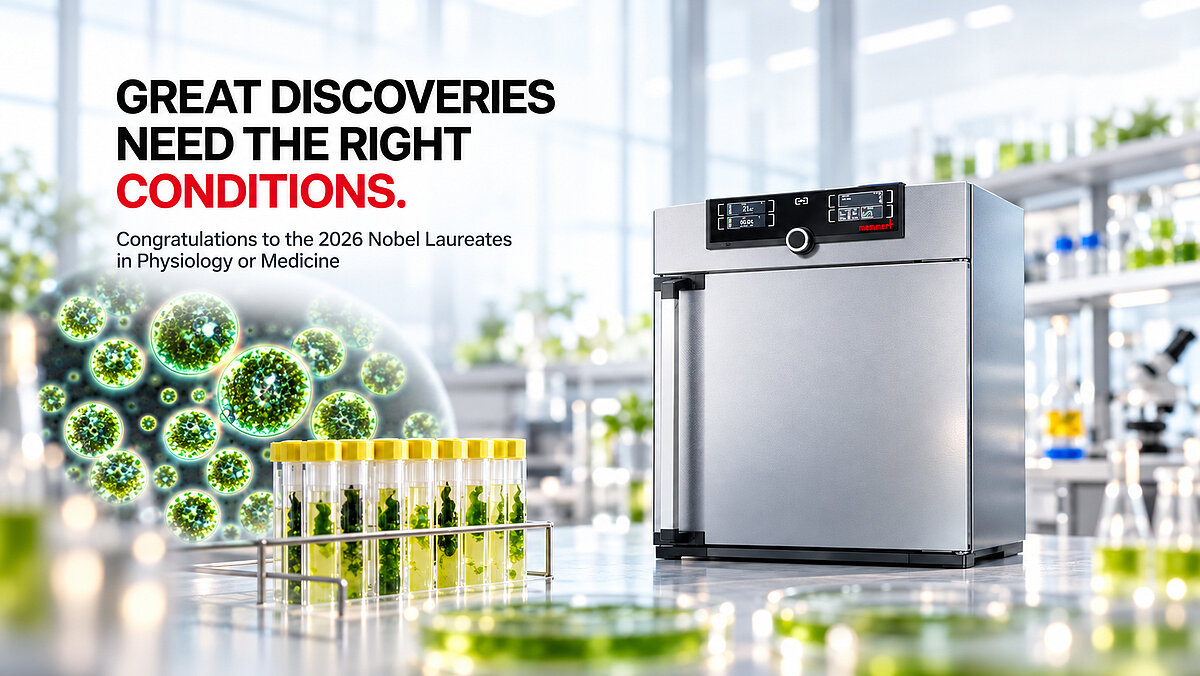
The 2026 Nobel Prize in Physiology or Medicine has been awarded to Peter Hegemann, Georg Nagel and Karl Deisseroth. For Memmert, there is an additional reason to celebrate: in later scientific research co-authored by Peter Hegemann, Chlamydomonas reinhardtii cells were cultivated under precisely controlled conditions in a Memmert IPP 110Plus incubator.
We warmly congratulate Peter Hegemann, Georg Nagel and Karl Deisseroth on receiving the 2026 Nobel Prize in Physiology or Medicine for their discoveries concerning light-gated ion channels and optogenetics.
It is one of the highest distinctions in science – and this year’s award has a special connection to Memmert. In a scientific study published in 2023 and co-authored by Peter Hegemann, a Memmert IPP 110Plus incubator was used to cultivate the green alga Chlamydomonas reinhardtii under precisely defined temperature and light conditions. For us, this is a remarkable example of how reliable environmental control supports scientists working at the highest level of research.
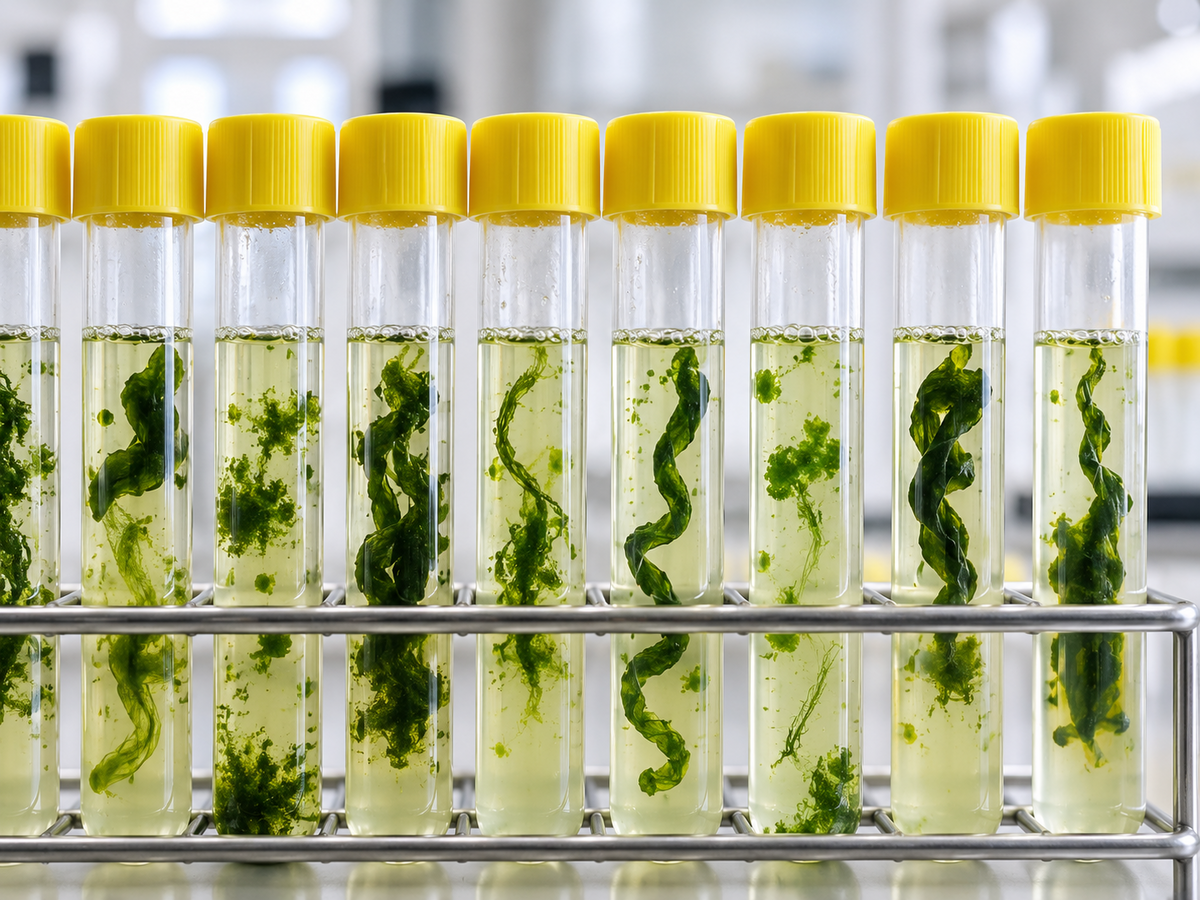
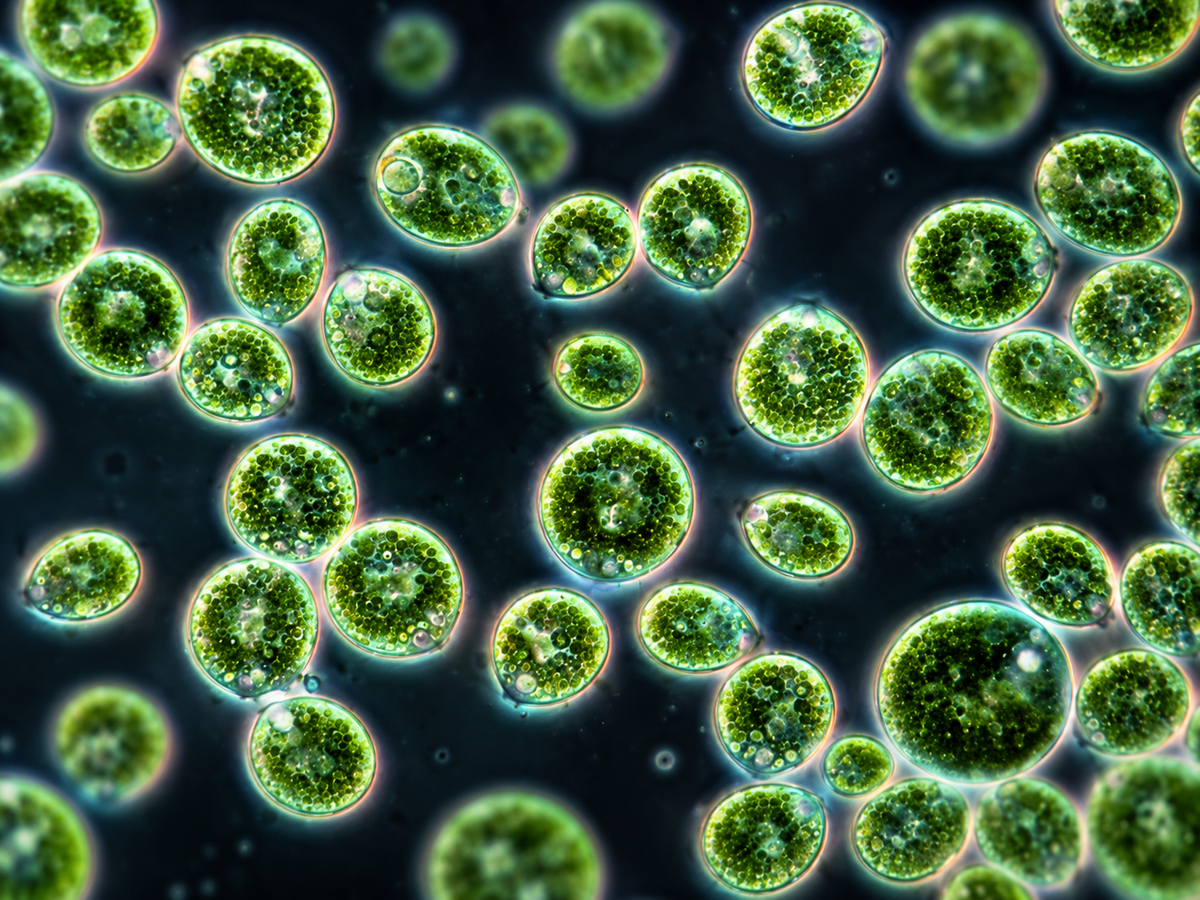
Peter Hegemann’s scientific work is closely connected to Chlamydomonas, a microscopic green alga that reacts to light. Research into these light responses contributed to the identification and characterisation of light-sensitive proteins known as channelrhodopsins. These proteins act as ion channels that can be activated by light.
Together with the work of Georg Nagel and Karl Deisseroth, these discoveries ultimately laid the foundations for optogenetics – a method that enables researchers to control selected cells using light. Today, optogenetics has become an important tool in neuroscience, allowing scientists to investigate the function of specific neural circuits with remarkable precision.
What began as fundamental research into the behaviour of a simple microorganism ultimately contributed to an entirely new way of studying the brain. But scientific interest in Chlamydomonas did not end with these discoveries. Researchers continue to investigate the organism, its behaviour and the mechanisms behind its responses to light. And this is where Memmert technology became part of Peter Hegemann’s later research.
In the 2023 publication “Light-regulated adsorption and desorption of Chlamydomonas cells at surfaces”, Peter Hegemann is listed as a co-author. The researchers investigated how Chlamydomonas reinhardtii cells attach to and detach from surfaces in response to different light conditions. The experimental methodology explicitly names the equipment used for cell cultivation: Memmert IPP 110Plus incubator.
The cultivation conditions were clearly defined. During the day phase, the cells were kept at 24 °C for 12 hours under white LED illumination. This was followed by a 12-hour dark phase at 22 °C.
For experiments involving organisms whose biological behaviour is influenced by light, precisely controlled environmental conditions form an essential part of the experimental setup.
Temperature, illumination and timing must remain reproducible so that researchers can reliably investigate the biological processes they are interested in. The Memmert IPP 110Plus provided the controlled environment required for this cultivation protocol.
Scientific breakthroughs are made by researchers. They begin with curiosity, expertise and the willingness to investigate questions whose future significance may not yet be clear.
The role of Memmert is different. Our task is to create an environment scientists can rely on.
Stable temperatures. Defined conditions. Reproducible processes.
Conditions that allow researchers to concentrate on the experiment itself. Reliable laboratory equipment may often operate in the background of scientific research. But precise and reproducible conditions are an important foundation for generating reliable results.
For Memmert, this is closely connected to what we stand for: Creating conditions researchers can trust – so they can focus on moving science forward.
The story behind optogenetics also demonstrates the importance of fundamental research.
At first glance, studying how a microscopic alga responds to light may appear to be a highly specialised scientific question.
Yet research into precisely these mechanisms contributed to the development of a technology that has transformed modern neuroscience. That is one of the fascinating aspects of science: Today’s highly specific research question can become tomorrow’s breakthrough.
Its future impact is often impossible to predict. For manufacturers of scientific equipment, this creates a clear responsibility. Researchers need technologies that provide dependable conditions, regardless of where their scientific questions may eventually lead.
Whether researchers are investigating microorganisms, analysing cellular behaviour or developing entirely new experimental methods, reproducibility begins with controlled conditions.
The 2026 Nobel Prize is also an outstanding recognition of the German scientific community.
Two of the three laureates, Peter Hegemann of Humboldt University of Berlin and Georg Nagel of the University of Würzburg, are based at German universities.
Their award highlights the international relevance of fundamental research conducted in Germany and demonstrates how long-term scientific curiosity can create an impact far beyond an individual laboratory or discipline.
We warmly congratulate Peter Hegemann, Georg Nagel and Karl Deisseroth on this extraordinary achievement.
For us at Memmert, it is particularly rewarding to know that our technology has been used in later scientific research co-authored by one of this year’s Nobel laureates.
A small contribution to a much larger scientific story – and a great example of the role we want to play.
Supporting research at the highest level with conditions scientists can trust.
Always ahead for you.